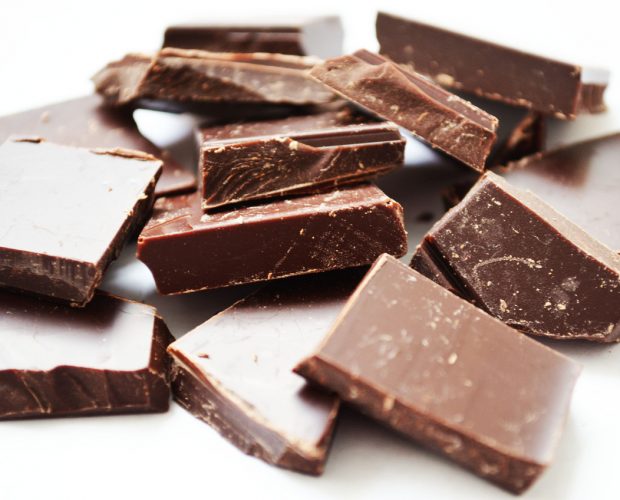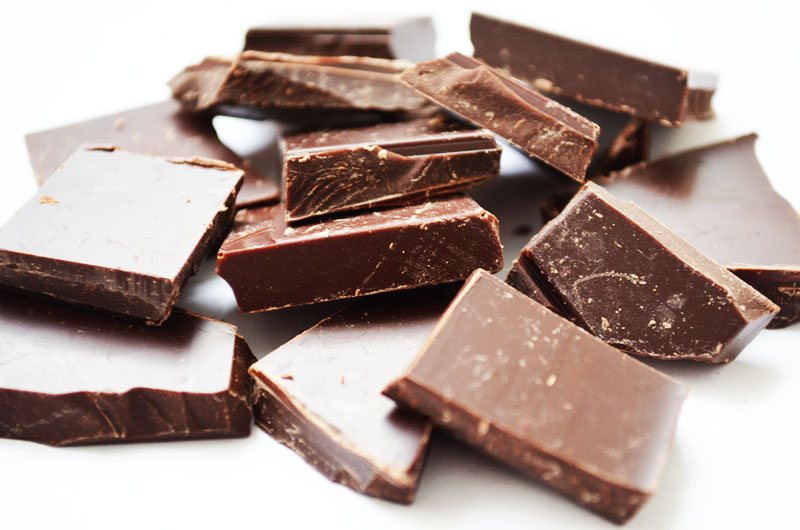
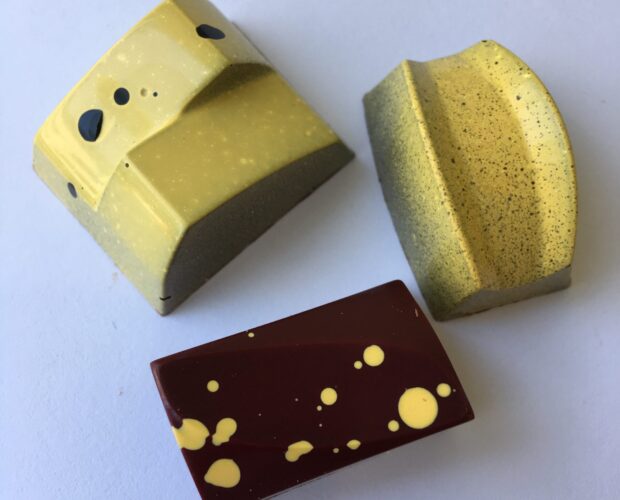
Double Skull Taleggio + Red Wine: Burgundian Pinot Noir cooked into a ganache with one of the stinkiest cheeses to come out of Caputo’s Cheese Cave (CCC).Matt Caputo
Blue’s Chocolates now featuring Caputo’s Cheeses!
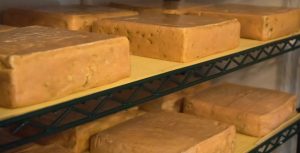
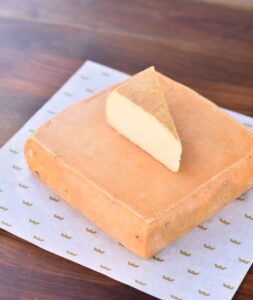
Double Skull Taleggio + Red Wine: Burgundian Pinot Noir cooked into a ganache with one of the stinkiest cheeses to come out of Caputo’s Cheese Cave (CCC).
Delicious Days Ahead
It’s been twenty years since Tony Caputo opened the doors here at our flagship location in downtown Salt Lake City, in a neighborhood with a rich history of Greek and Italian culture. Over the years, we’ve experienced the many ups and downs of small business ownership, but we’re proud to hear from our customers how much we mean to Salt Lake’s thriving food scene. We’ve done so by remaining committed to our deep, abiding love for great food, and sharing that love with the enthusiastic community we’re a part of. As we looked back at the last twenty years and contemplated the road ahead, we decided it was time to breathe new life into the Caputo’s brand with a fresh new look.

Inspired by the art of Utah artist Dan Christofferson, whose distinct style is rooted in symbolism and bold graphics, we began a further conversation about the Caputo’s brand and asked Dan to create a new look that seamlessly integrates our history and motivations with our vision for what lies ahead. Central to this new look is the three-pointed crown. The crown is a powerful icon that represents our core philosophy, with its three points embodying the past, present, and future of Caputo’s. These three pillars serve as symbols of our heritage, our expertise, and our trailblazing spirit.
Over the years our purpose has become increasingly clear. We know we have a responsibility to preserve and protect food items of unique provenance. In the face of an increasingly homogenized, mass-produced, and genetically engineered agricultural system, we continue to fight for time-tested culinary traditions, for artisan spirit, and for authentic flavor. It’s our true passion, a passion that was first instilled in me by my yiayia (Greek for grandmother), who kept an urban garden WAY before it was cool to grow your own food. From that small backyard plot, vibrant and ethereal smells wafted through her small home in the summer, enveloping my senses and giving me the first glimpse into the true essence of flavor.
Those early sensory experiences inspire a question we ask ourselves all the time: what is it that gives Old World flavors their particular allure? We call it terroir. It’s that special sense of place found in the aromas, the textures, and the tastes that says unabashedly: “this comes from somewhere.” Not from a factory, not from a lab, but from the land. Today, it’s our mission to champion those products with deep ties to the unique places they come from, whether it’s Utah farmstead goat cheese or Venezuelan single origin chocolate, because those special products tell the stories of where they come from with every mouth-watering bite.
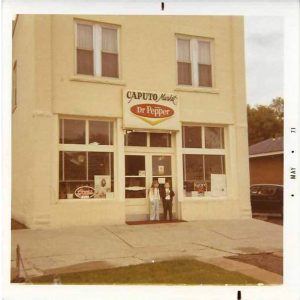
We know that food is much more than mere sustenance; culinary traditions help make up the fabric of our various cultures and upbringings, and food has always been an essential part of the Caputo family. After coming to the United States from Greece and Italy, the Caputos owned and operated a small market on Salt Lake’s west side, which happened to be home to Utah’s very first refrigerated deli case. One could say that my dad’s visits to that little market as a kid, where he would get treats from his aunts who kept shop, served as the original spark of what would eventually become our beloved market & deli.
Now, the torch has been passed to me, and I feel it is important to carry on the tradition and constantly re-imagine what it means to be a purveyor of fine foods in the modern age. Caputo’s has always been a family affair, from my dad, uncles, cousins and now my amazing wife Yelena, to the incredible crew that has been with us for so many years, who we consider part of the family. This is why the wonderful food community here in Salt Lake, and our loyal supporters beyond, trust our expertise: because it’s been passed down from generation to generation. As we look to the future with a brash independent spirit, our new look, and renewed enthusiasm for great food, we can’t help but feel only one thing: our most delicious days are surely yet to come.

Ask Matt: Why Amano?
Q: What made you decide to feature Amano for this year’s Chocolate Festival and how is Amano different from other craft chocolate makers?A: Amano is the most award winning American chocolate maker ever. The amount and quality of the awards they have won make this statement indisputable in a category where there always seems to be dispute. Not on this point. Amano was part of the first wave of craft chocolate makers in the US. When they got started, there was only about 14 other chocolate makers including giants like Hershey’s. Now, there are hundreds.
Amano has a unique advantage in sourcing as they do not buy cacao through the usual channels open to most small craft chocolate makers. Art often travels to origin and combs through the jungle to find unique origins and sources directly from the farms. In this way he is able to find very uncommon and rare cacao that no one else has. Amano’s chocolate making style is one of a kind. On the scale from loud brash American to sophisticated European, Amano achieves what makes each style great without sacrifice.
Art is widely recognized around the world as one of the world’s top experts in all things chocolate. In the global chocolate community, he is revered.
Ask Matt: What IS bean to bar chocolate, really?
“Ask Matt Caputo” is an ongoing feature where Matt answers commonly asked questions from the market. This week, he discusses the true meaning of bean to bar or craft chocolate.
Q: How would you define bean-to-bar chocolate and what sort of flavors can we expect from craft chocolate? Do you recommend any coffee and chocolate pairings?
A: This is an important and somewhat nebulous terminology that is often abused. My definition is fairly straight forward. To be bean to bar the chocolate bar must be produced from raw cacao beans all the way through each production step at a factory owned by the brand in question.
Q: How is it different from the mass produced chocolate we all grew up eating?
A: Bean to bar should not necessarily be equated to good. There are more bean to bar chocolate makers producing terrible product than there are making great chocolate. Sure most of the elite brands are bean to bar, but not all. Bean to bar should simply indicate you are talking to the artist in the flesh. Doesn’t mean you will like their art. Unfortunately, there are so many brands that lie or at the very least stretch the truth about their bean to bar status. So many.
What I think you are trying to get at with what makes bean to bar chocolate better than big chocolate we all grew up with is this: it should be about highlighting cacao beans of excellent provenance. Big producers do not. They use very poor beans and then use techniques (“dark” roast aka burned) and ingredients (too much extra cocoa butter and loads of vanilla) to create a flavor, rather than coaxing the flavor intrinsic to the beans out.
Just like wine is about honoring very special grapes grown in very special areas, so is chocolate with cacao beans. Most large chocolate producers make what I like to refer to as “vanilla flavored candy.” Despite meeting certain technicalities of being called dark chocolate, I think it should be illegal to call it the same as what most bean to bar chocolate makers are doing.
Q: Do you recommend any coffee and chocolate pairings?
A: Absolutely. My primary recommendation is do not pair a coffee made with specialty beans and roasted responsibly with “vanilla flavored candy.” Likewise, do not pair chocolate made with excellent cacao with coffee exhibiting symptoms of having been roasted on the surface of the sun. Beyond this, I do have some experience, but need to conduct more research! I will say since the two are such a natural fit the results of using my rule of thumb regarding matching the quality of the two have always been really enjoyable.
PSST! Want to know more? Join us at an Intro to Fine Chocolate class!
Disclaimer: While Matt Caputo is a Certified Cheese Professional and specialty food fanatic, he is not a medical professional, doctor, or certified nutritionist. Please consult with your doctor or other qualified health care professional before making any healthcare decisions, diagnostics or treatment decisions based on Matt’s answers.
Ask Matt: What’s So Special About the Double Skull Taleggio?
“Ask Matt Caputo” is an ongoing feature where Matt answers commonly asked questions from the market. This week, he discusses one of the newest cheeses released from Caputo’s two cheese caves- Double Skull Taleggio.
Q: Caputo’s now has both Taleggio and Double Skull Taleggio. What’s the difference and what’s special about the Double Skull?
A: Taleggio is Italy’s 2nd most popular cheese. However, it is a washed rind, which in part means it is surface ripened. The average European would consume these types of cheese MUCH more ripened than we do here in the United States because they have broader practices of proper affinage in Europe. If not aged in a cave at 97% humidity and daily washing of the rind, you can get severely off-putting flavors- think chemicals, astringency, acrid, bitter, and ammonia- by the time the cheese is fully ripe. Aging with TLC in the proper environment like in Caputo’s Cheese Cave allows for full ripeness without the polluted flavors of those off notes.
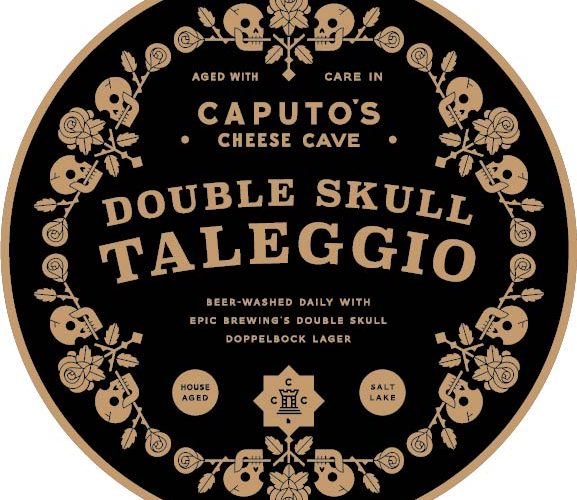
With our Double Skull Taleggio we take it one step further and replace the brine used for regular Taleggio with a Doppelbock beer. Specifically, Epic Brewing’s Double Skull. We chose this after a night of “research” at the home of Kevin Crompton (Epic’s brew master). It gets washed with this sweet and malty beer 1 to 3 times a day for a month. It emerges as the epitome of umami.Ask Matt Caputo: Are Most Extra Virgin Olive Oils in Grocery Stores Mislabelled?
“Ask Matt Caputo” is an ongoing feature where Matt answers commonly asked questions from the market. This week, he discusses the mislabelling of EVOO found in many grocery stores.
Q: I heard that most Extra Virgin Olive Oils found in grocery stores are mislabeled. How so?
A: Last week, 60 Minutes had a big exposé on how 70 to 80% of the olive oils found in U.S. grocery stores are mislabeled, meaning they are not real Extra Virgin grade.
Although it was “breaking news,” this is not new news. Tom Mueller first broke this story in a 2007 New Yorker article titled “Slippery Business.” But even before then, we knew something was not right in the industry. We were seeing incredibly vibrant-green colors in olive oils that tasted flat, stale, and worse.
After years and years of blind taste tests, I can identify between dozens of oils and name the brand and region of production (I’ve even been able to impress my wife, Yelena, with this skill). I’ve learned to put a lot of faith in my nose and palate.
Over the years, any oil whose flavor, aromas, and textures did not add up to the claims on the label were discontinued at Caputo’s. We always eagerly analyze samples for quality before putting products on our shelves.
We do not stop at blind taste tests, however. We wanted to make certain, so in cases where the price seemed too good to be true, we sent the oils in for professional taste tests to Agbiolab where they conduct many gustatory, chemical, and other scientific tests on olives and olive oil. At no small expense, we have had them run a full spectrum of tests—a tasting panel, UV light test, chemical analysis, etc.—on oils we were curious about.
When a study came out by the UC Davis Olive Center that tested 40 popular brands of olive oil showing how the vast majority of them failed the tests to be called Extra Virgin, we were proud—but not surprised—that Caputo’s did not carry a single one of them.
The moral of the story: Even the less expensive Extra Virgin Olive Oils on Caputo’s shelves are the real deal, and those that are more expensive have been selected for a reason and will be worth every penny. The only thing to decide upon is whether you would like a grassy Sicilian, a thistly Tuscan, or a more complex Umbrian oil.
We keep samples open, so patrons can taste each to ensure they are going to enjoy their purchase. So come on in!
Disclaimer: While Matt Caputo is a Certified Cheese Professional and specialty food fanatic, he is not a medical professional, doctor, or certified nutritionist. Please consult with your doctor or other qualified health care professional before making any healthcare decisions, diagnostics or treatment decisions based on Matt’s answers.
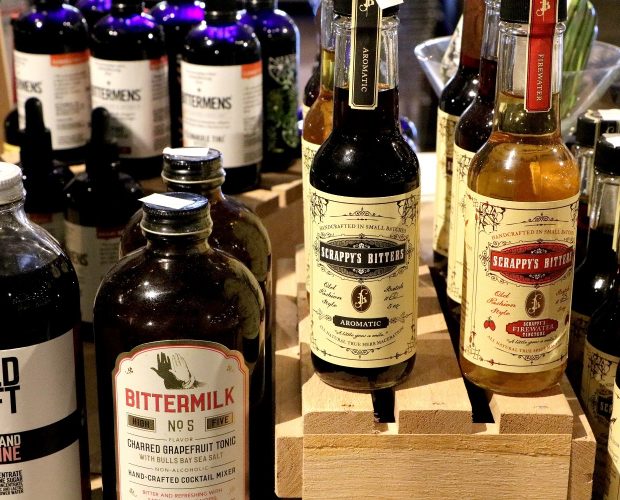
Ask Matt Caputo: Will Bitters Help With Over-Eating?
“Ask Matt Caputo” is a new, ongoing feature where Matt answers commonly asked questions from the market. This week, he discusses bitters as a cure for a distressed stomach.
Q: I over-ate this Thanksgiving. And with holiday parties and Christmas coming up, I’m wondering if I should look into aromatic bitters to ease my pain. Will they make a difference?
A: Well, I actually have quite a bit of experience with eating too much. If there is one thing I love it is food, and during the holidays, I can’t stand the thought of not having each and every one of my old favorites. On top of that, how could I pass up a new gastronomic experience. Shun a new dish just because I am full? Pah! No chance.
As the years go by, it is slowly but surely getting more difficult to put up with the physical aftermath, though. Over the past year, I have had more opportunities than I am proud to admit to test the curative powers of aromatic cocktail bitters.
As one would learn in our Intro to Bitters class, the history of these elixirs includes wild claims from the producers, purportedly curing everything from flatulence to impotence and absolutely everything in between. Luckily, the FDA cracked down on the “snake oil” side of bitters a long time ago.
However, from my experience, there is certainly truth to bitters ability to aid in digestion. Anytime I have overeaten or I am not feeling tip top in the tummy, I have a nice big glass of sparkling water with a healthy dose of Peychaud’s. Within a few minutes, I feel notably better. It almost never fails. Put 10 to 12 dashes in a small white wine glass, and that ought to do. Yeah, I take it in a wine glass. Why not? It smells incredible.
Obviously, I am no doctor, scientist, or herbalist, so I will leave it to them to tell you exactly which ingredient in these bitters is doing exactly what. But this practice should not seem that strange. Monks, apothecaries, and even grandmas from all around the world have long known the digestive value of things with bitter flavors.
Disclaimer: While Matt Caputo is a Certified Cheese Professional and specialty food fanatic, he is not a medical professional, doctor, or certified nutritionist. Please consult with your doctor or other qualified health care professional before making any healthcare decisions, diagnostics or treatment decisions based on Matt’s answers.
Ask Matt Caputo: What is the Best Process to Taste Fine Chocolate?
“Ask Matt Caputo” is an ongoing feature where Matt answers commonly asked questions from the market. In conjunction with Chocolate Week, he discusses how to taste chocolate like a pro and the one key component: focus.
Q: What is the Best Process to Taste Fine Chocolate?
A: I think most “experts” put so much emphasis on the methodology that it can suck the fun right out of tasting chocolate. You hear things like, “Don’t chew,” “Put the chocolate on the front of your tongue,” “…the back of your tongue,” etc. This is all crazy to me. The texture on your tooth is part of the satisfaction of eating not only chocolate, but all food. Why deprive yourself of part of the pleasure? Additionally, different parts of your tongue are for different things. You’ve all heard it: saltiness and sweet towards the front, acidity on the sides, bitterness in the back, and savory in the middle. Your palate would be very bored without any one of those tastes so why focus chocolate on just one area?
No, I say we all have the equipment to taste, and nature will take its course to allow us to get the most out of it if we just focus. Whether for a professional analysis or just pleasure, focus is the key to tasting chocolate. In our busy lives it is all too common for us to shovel food into our mouths and wolf it down without really being present enough to describe what we are experiencing.
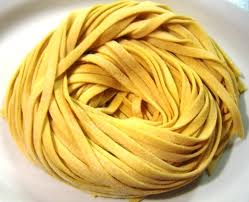
Slow down. Look first. The eyes take the first bite. What tints of color do the chocolate exhibit? Then before you eat, smell. Over 90% of what we consider taste is actually our sense of smell, so prime the pump. Chew, but don’t wolf it down. Use your teeth to get the satisfaction of snap but don’t just let your reflexes swallow too fast. Let it melt on your tongue by working it all around your tongue and roof of your mouth. Suck air in through your mouth and out through your nose.
Now, you can swallow, but it does not end there. The flavor will continue to develop. A lot of our taste is experienced after swallowing—little particles coming up through your throat and continuing to titillate your senses via this retronasal taste. So despite the fact that “eating” is over once you swallow, the experience continues, so by all means continue to be present. Don’t let the mind wander. See how the flavor continues to evolve and change. Then, do it all again. And again. And again. This is how to taste chocolate. Or anything for that matter.
Disclaimer: While Matt Caputo is a Certified Cheese Professional and specialty food fanatic, he is not a medical professional, doctor, or certified nutritionist. Please consult with your doctor or other qualified health care professional before making any healthcare decisions, diagnostics or treatment decisions based on Matt’s answers.
Ask Matt Caputo: Do Various Pasta Shapes Taste Differently, or Is It Just About Texture?
“Ask Matt Caputo” is a new, ongoing feature where Matt answers commonly asked questions from the market. This week, he discusses how the shape of pastas will affect taste and texture
Q: Do various pasta shapes taste differently, or is it just about texture?
A: Different shapes of pasta, even though they might be made by the same brand with the same ingredients, will actually taste differently. Differences in texture will affect how we experience both the taste of the sauce and the pasta.
Take two examples from the extremes: Capellini (tiny hair-like threads) and Calamaretti (thick squid-like ringlets). Both are made from two ingredients: durum semolina and water. The Capellini threads are cut into shorter and shorter threads by the tooth, but are rarely actually smashed and ground by the tooth before swallowing. The Calamaretti, however, are thick and will have a richer texture as the tooth smashes through and releases creamy textured starches, which are also rich in grain flavor.
The heavier Calamaretti will lend a creamy, almost porridge-like flavor to the pasta dish. The ringlets are also great at catching large chunks of coarsely hand-ground tomatoes or other large particles, such as vegetable slices, cubes of pancetta, and so on. If you’ve never had it, Maestri Pastai’s Calamaretti will show you that dried pasta can be far better than most fresh pasta.
Disclaimer: While Matt Caputo is a Certified Cheese Professional and specialty food fanatic, he is not a medical professional, doctor, or certified nutritionist. Please consult with your doctor or other qualified health care professional before making any healthcare decisions, diagnostics or treatment decisions based on Matt’s answers.
Ask Matt Caputo: Clarification on Nitrates in Meat
“Ask Matt Caputo” is a new, ongoing feature where Matt answers commonly asked questions from the market. This week, he clarifies a few misconceptions about nitrates.
Q: I’ve heard that I should avoid nitrates in food, but I noticed that some of Caputo’s meats don’t claim to be nitrate-free. Why not? Are nitrates really that bad for me?
A: Many of our meats are nitrate free, but that doesn’t mean they are any better for you. Even all the “uncured” salami out there uses nitrates—even if it’s not on the label. Nitrates can come from natural sources, such as celery powder, rosemary extract, etc. These natural sources of nitrates convert in your gut to nitrites just like sodium nitrate from pink curing salt. However, they can be listed as “natural flavorings,” even though they contribute nitrate, not flavor.
Unlike pink salt, these “natural flavorings” and the exact amount of nitrates are not regulated by the USDA or FDA, unfortunately. So in unlabeled salami, the actual dosage of nitrates you are getting is often much, much higher than if you just ate the stuff with sodium nitrate listed on the label. The key is balance. Eat some fresh veggies with a few bites of salami and cheese, and you’ll be fine. Everything in moderation!
Disclaimer: While Matt Caputo is a Certified Cheese Professional and specialty food fanatic, he is not a medical professional, doctor, or certified nutritionist. Please consult with your doctor or other qualified health care professional before making any healthcare decisions, diagnostics or treatment decisions based on Matt’s answers.
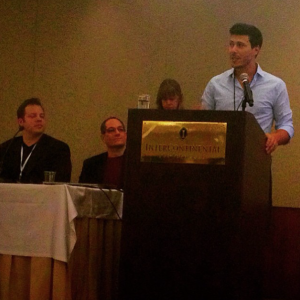
Matt Speaks at the Fine Chocolate Industry Association
Pam Williams, president of the Fine Chocolate Industry Association, invited me to attend and speak at the 2015 Annual Winter Meeting held in San Francisco earlier this month. The audience consisted of major players in the national and international fine chocolate industry, including chocolate authorities, professionals, retailers, entrepreneurs, conservationists, media, and others.
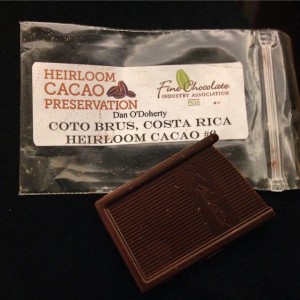
I was asked to discuss how the Heirloom Cacao Preservation Initiative has added value to Caputo’s as a retailer, A Priori as a distributor, and, ultimately, the end consumers.
Below is the copy of my speech that I’d like to share with our readers:
“At Caputo’s Annual Chocolate Festival we donate 100% of the proceeds to the HCP. This year we raised over $3000 in one night. For some, that’s a large donation, for others a small. But beyond donating the money, the best part was seeing our customers connect with the HCP and what it stands for. The reason why that is so amazing is because our customers don’t put much stock in certifications and the HCP is by nature a certification.
Let me explain more about my certification averse clientele. In addition to being CEO at Caputo’s, I also own A Priori, a company specializing in distribution and wholesale of fine chocolate. We carry over 500 bars of chocolate. More than 150 of these bars retail for more than $10. None of them for less than $5. Hardly any of them carry the “Fairtrade” branded certification. In fact, the more expensive the bar, the less likely it is to have common certifications. I am not saying certifications are always a bad thing, but I am just pointing out that my customers don’t look to certifications to validate their purchases.
Like me, my customers understand that HCP is more than a certification. It is a protection for farmers who go to the trouble to grow something special. Who dare to fight an uphill economic battle to preserve one of mankind’s greatest achievements in agronomy. It is a protection for barsmiths who actually use the cacao beans they claim, who shout their sources from the roof tops instead of shrouding them in secrecy, or worse.
Imagine in the wine world if it was discovered that a wine labeled Barolo was found to neither be made with Nebbiolo grapes, nor came from Piedmont, Italy. There would be a huge price to pay for the offender. Unfortunately, that’s exactly what happens all too often in the chocolate world. But in the chocolate world there is no sheriff in town. In the long run, HCP has the best shot at changing this sad vacuum of oversight.
In addition to the HCP’s benefit of protecting heirloom cacao, it is also different from other certifications in that it causes people to be more thoughtful instead of less. With most certifications people use them to stop thinking. Once they have bought into what the certification stands for and they see a chocolate has that “box checked” they stop thinking and buy. HCP invites people to look for more information and provides the name of the farm and where it comes from. HCP will cause more people to fall down this rabbit hole and become completely obsessed with chocolate like I did 10 years ago. It will swell the ranks of our fellow chocolate geeks.
Like me, many of you retailers may not sell many HCP bars, but as more and more cacao beans become designated, more and more quality chocolate makers will start using them. There are already some things coming down the pipeline that are going to absolutely blow you away.
But even if you are not in the elite chocolate business — maybe you are a large manufacturer or a retailer selling chocolate on the cheaper end of the scale — you should care about HCP most of all. HCP adds value to our whole industry. Think about it: A $3 Hershey bar doesn’t sound so expensive if connoisseurs are accustomed to paying $30 for a good bar of Tranquilidad.
So whether or not your company will ever use or sell HCP beans or chocolate, I would encourage you to support HCP because it supports the growth and sustainability of our whole industry.”
Inspiring Chocolate
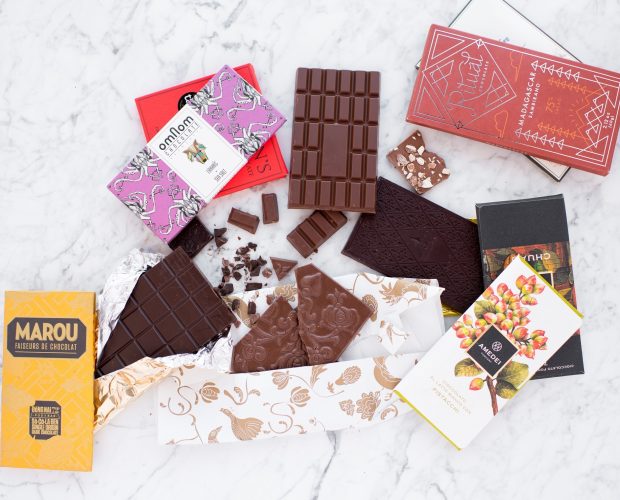
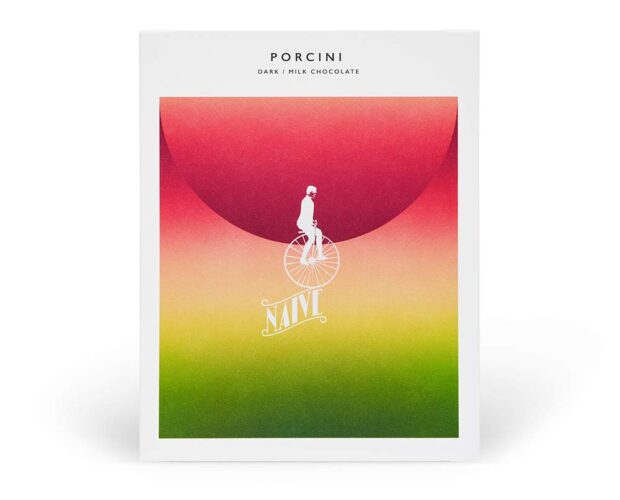
It has been a long time since I have personally written a blog post. I wish I had more time, but with our recent growth I have been too buried to justify time to write. However, few things send jolt me to attention like two new chocolate bars from Chocolate Naïve — made in a little town on the Eastern side of Lithuania.
Here’s how it happened.
I was sitting down with another unrelated chocolate maker tasting through a bunch of new bars while being filmed for a chocolate documentary. Throughout the tasting we were enjoying or not enjoying things as much or as little as might be expected. However, shortly after we popped our first bite of Naïve’s Chuao and Porcini bars, I gasped in ecstasy then involuntarily made guttural exclamations of awe and disbelief.
At the exact same time the other chocolate maker expressed his first compliments of the day. I knew instantly something incredibly great was sitting before me. Although Chuao is more commonly accompanied by a balancing amount of vanilla, Naïve’s rendition has none. I appreciated this rare opportunity to delve into the aromas intrinsic to raw Chuao beans that always remind me of horse blanket. Other aromas like, fine cigars, campfire, perfumed woods, toasted marshmallow, black currants and molasses are harder to pinpoint if you’re not really trying, but certainly make for one profound flavor journey either way.
Sure the Chuao bar has a far from silky texture, but one should not look a gift Chuao in the mouth. Instead, a jaded connoisseur should appreciate this visceral glimpse into the soul of this prized jewel of the rain forest.
The Porcini bar is even more of a surprise given I did not expect to like it. Porcini is not the most hip ingredient and it seems that inclusion bars (bars with non-cacao ingredients) these days have to have super trendy flavors added to them to get attention. Also, inclusion bars with mushrooms normally highlight the mushroom and the chocolate is an afterthought. Not the case here. The origin is completely clear and the Porcini add depth and nuance to an extent that truly is still freaking me out.
I have a lot more to say about the ethos surrounding Chocolate Naïve, but that will have to wait for another time. Until then, make sure you get them quickly “Limited Edition” means limited edition with Naïve and both of these bars will be gone soon.